

Meet Your Board-Certified Surgeon
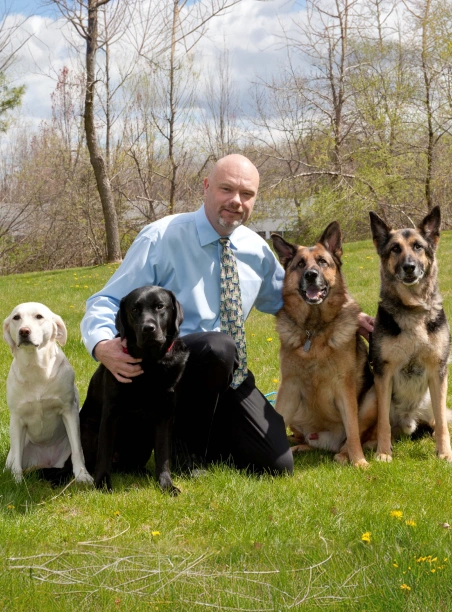
Dr. Paul McNamara, DACVS
Soft tissue surgeries at Hudson Highlands Veterinary Medical Group are performed by Dr. Paul McNamara, a Diplomate of the American College of Veterinary Surgeons (DACVS). Board certification in veterinary surgery requires years of advanced residency training beyond veterinary school, rigorous examinations, and demonstrated surgical expertise.
Dr. McNamara brings a high level of surgical training and experience to every procedure, so your pet gets the specialist-level care they need, close to home. His advanced training allows him to assess each situation carefully and perform the right procedure safely and effectively.
View all specialty services
Soft Tissue Conditions We Treat
Soft tissue surgery covers a broad range of procedures that involve the internal organs, skin, and other structures that aren’t bone or joint. It’s one of the most common areas of veterinary surgical care, and it includes everything from removing a bladder stone to treating a life-threatening stomach torsion. Because these conditions vary so widely, having a board-certified surgeon involved makes a real difference.
Mass & Tumor Removal
Masses and tumors can develop on or within almost any part of a pet’s body — the skin, spleen, liver, intestines, and more. When a lump grows to a concerning size, changes in appearance, or causes discomfort, surgical removal is often recommended. Dr. McNamara performs careful excisions with the goal of complete removal while preserving surrounding healthy tissue. Removed masses are typically submitted for pathology so you have a clear picture of what your pet is dealing with and what follow-up care, if any, is needed.
Gastrointestinal Surgery (Foreign Body, Obstruction, Resection)
Stomach and gastrointestinal emergencies are among the most serious situations a pet owner can face. Gastric Dilatation-Volvulus (GDV), commonly called bloat, occurs when the stomach fills with gas and twists on itself. It is a true emergency that requires immediate surgical intervention — without surgery, it is fatal.
Beyond GDV, Dr. McNamara also performs surgery to remove stomach or intestinal tumors, clear obstructions caused by foreign objects your pet has swallowed, correct intestinal torsions, and perform resection and anastomosis (removing a damaged section of intestine and reconnecting the healthy ends) when portions of the GI tract are no longer viable.
Urologic Surgery (Bladder Stones, Urethrostomy)
A cystotomy is a surgical procedure to open the bladder — most commonly to remove bladder stones that are too large to pass on their own or that keep coming back. In some cases, particularly in male cats who experience repeated urinary blockages, a urethrostomy may be recommended. This procedure widens the urethral opening to reduce the risk of future blockages, which can be life-threatening if left untreated.
Liver & Gallbladder Surgery
The liver and gallbladder can be affected by a range of conditions — from benign liver cysts and nodular hyperplasia to gallbladder mucoceles, which occur when the gallbladder becomes filled with a thick, abnormal bile. Left untreated, a gallbladder mucocele can rupture and become life-threatening. Dr. McNamara performs liver lobectomies (removal of affected liver lobes) and cholecystectomies (gallbladder removal) when medically indicated.
Spleen Surgery (Splenectomy)
The spleen is a common site for masses in dogs, particularly older large-breed dogs. Splenic masses can bleed suddenly and without warning, leading to a life-threatening emergency. When a splenic mass is identified — whether on routine imaging or during an emergency presentation — a splenectomy (surgical removal of the spleen) is often the recommended course of action. Dr. McNamara performs splenectomies both urgently and on a planned basis, depending on your pet’s presentation.
Hernia Repair
A hernia occurs when an organ or fatty tissue pushes through a weak spot in the surrounding muscle or connective tissue. In pets, hernias can be present from birth or develop after an injury. Surgical repair closes the opening and returns everything to where it belongs, preventing further complications. Common types treated include umbilical, inguinal, perineal, and diaphragmatic hernias.
Respiratory Surgery (Laryngeal Paralysis, Tracheal Collapse)
Respiratory conditions like laryngeal paralysis and tracheal collapse can significantly impair your pet’s ability to breathe comfortably. Laryngeal paralysis, common in older large-breed dogs, occurs when the muscles that open the larynx (voice box) no longer function properly, restricting airflow. Dr. McNamara performs a procedure called a “tie-back” (arytenoid lateralization) to permanently open the airway. Tracheal collapse, more common in small breeds, may be managed surgically with tracheal ring prosthetics in appropriate cases.
Wound Management & Reconstructive Surgery
Complex wounds, whether from trauma, infection, or tumor removal — sometimes require advanced surgical techniques to close properly and heal well. Dr. McNamara performs reconstructive procedures including skin flaps and grafts to restore function and appearance. Proper wound management reduces the risk of infection, supports healing, and gets your pet more comfortable faster.

What to Expect: From Consultation to Recovery
We know that surgical procedures can be stressful for both pets and their owners. Our team works hard to keep you informed at every stage of the process.
- Consultation: Dr. McNamara will review your pet’s history, examine your pet, and discuss diagnostic findings. He’ll explain what surgery involves, why it’s recommended, and what the expected outcomes are so you can make an informed decision.
- Pre-Surgical Preparation: Depending on the procedure, pre-operative bloodwork and imaging may be recommended. You’ll receive clear instructions on fasting requirements and what to expect on the day of surgery.
- Day of Surgery: Your pet will be carefully monitored under anesthesia by our experienced veterinary team. Safety protocols are followed throughout every procedure.
- Recovery: Most pets go home the same day or the following day, depending on the procedure. You’ll receive detailed discharge instructions, including activity restrictions, medication schedules, and signs to watch for. Follow-up appointments are scheduled to monitor healing.
Recovery timelines vary depending on the type of surgery and your individual pet’s health. Dr. McNamara and our team will give you realistic expectations specific to your pet’s procedure.
Our Surgical Suite
Hudson Highlands Veterinary Medical Group is equipped with a dedicated surgical suite designed to support safe, efficient veterinary surgery. Our facility includes modern anesthetic monitoring equipment, heated surgical tables, and the instruments necessary for a wide range of soft tissue procedures.
Having a board-certified surgeon on-site means that the same level of specialist care you’d expect at a large referral hospital is available to you right here in Hopewell Junction — without the long drive.
Scheduling & Referrals
Hudson Highlands Veterinary Medical Group works with referring veterinary practices throughout the region. If your primary vet has recommended a surgical consultation, we’ll work closely with them to make sure your pet receives coordinated, consistent care. After your pet’s procedure, we’ll keep your regular vet informed so everyone is on the same page.
Consultations are by appointment only. To schedule a visit with Dr. McNamara, call or contact the referral coordinator. We’re happy to answer any questions you have before your appointment.
Schedule an Appointment
Frequently Asked Questions About Soft Tissue Surgery
What is soft tissue surgery in veterinary medicine?
How do I know if my pet needs soft tissue surgery?
Does my pet need a referral for soft tissue surgery?
What is the recovery time after soft tissue surgery?
Is soft tissue surgery the same as orthopedic surgery?
Related Services
Orthopedic Surgery
Performed by Dr. Paul McNamara, our in-house veterinary surgeon, orthopedic surgery at Hudson Highlands covers bone, joint, and musculoskeletal conditions in dogs and cats. Procedures include TPLO for torn cruciate ligaments, fracture repair, patella luxation surgery, femoral head osteotomy (FHO), and treatment of growth abnormalities. Dr. McNamara and his surgical technicians are also certified in the PennHIP technique for measuring canine hip joint laxity, used to screen dogs for hip dysplasia and assess breeding candidates.
Learn More
Internal Medicine
Our internal medicine service provides specialist-level diagnosis and treatment for complex conditions affecting the internal organ systems — including metabolic disease, endocrine disorders, immune-mediated blood disease, gastrointestinal conditions, liver and kidney disease, infectious disease, and fever of unknown origin. Outpatient diagnostics, including high-resolution ultrasonography with guided aspirates, are available at our main facility with board-certified specialist Dr. John Broussard.
Learn More