

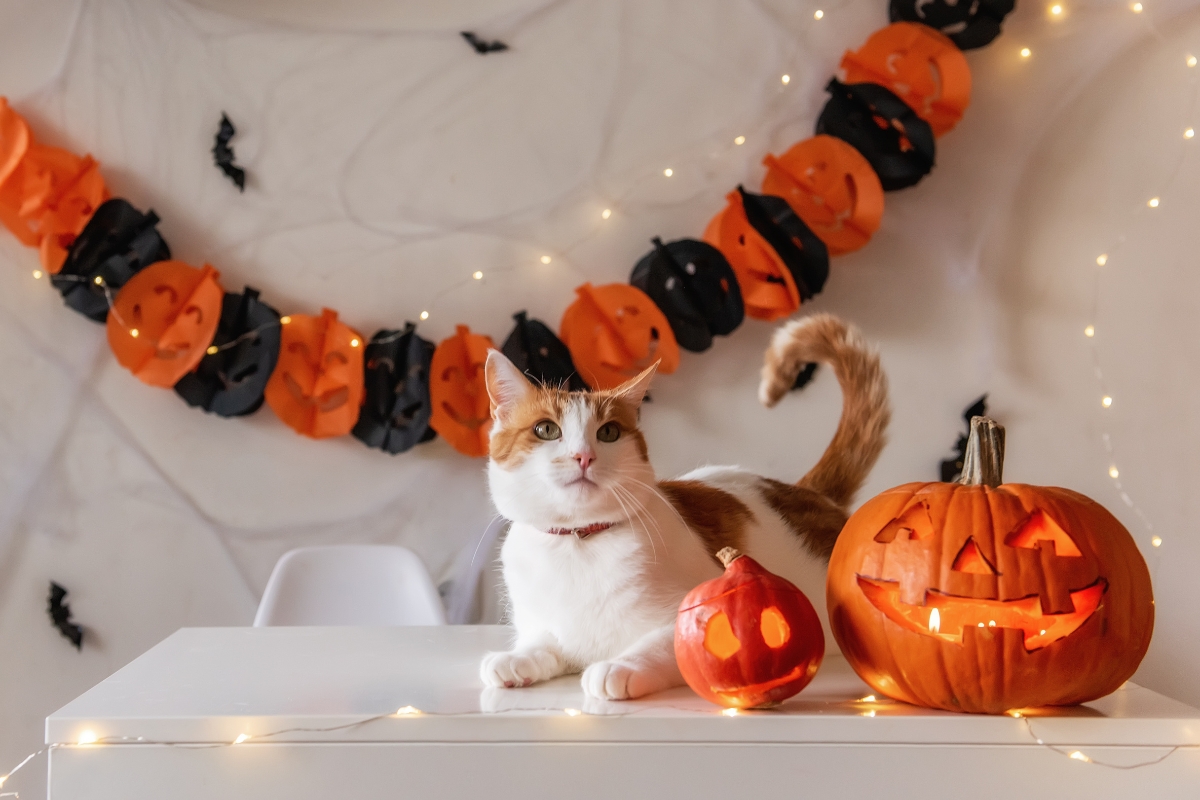
Halloween can turn an ordinary home into a very different place for a cat. Doorbells ring repeatedly. Strangers appear in unusual clothing. Candy bowls sit within reach. Decorations flash, move, dangle, and make unfamiliar sounds.
While these changes may seem harmless to people, cats experience their surroundings differently. A frightened cat may hide, bolt through an open door, chew an unfamiliar object, or swallow something while playing.
A little preparation can prevent many Halloween-related problems. Here are 15 risks cat owners should consider before costumes come out and trick-or-treaters arrive.
1. An Open Front Door Creates an Escape Risk
The front door may open dozens of times during trick-or-treating. Even an indoor cat that normally ignores the doorway may react differently when frightened.
Costumes, loud voices, excited children, and repeated knocking can cause a cat to run. Once outside, a frightened indoor cat may hide rather than respond when called.
Keep your cat in a secure room before visitors begin arriving. Include water, a litter box, bedding, and familiar toys. Identification also matters. A microchip provides permanent identification if a cat becomes lost.
2. Chocolate Can Be Dangerous
A cat is less likely than some dogs to raid a candy bowl, but that does not make chocolate safe.
Chocolate contains methylxanthines, including theobromine and caffeine. Depending on the amount and type consumed, exposure can cause digestive, cardiovascular, and neurologic problems. Dark and baking chocolates generally contain higher concentrations than milk chocolate.
Do not wait for an obvious illness if you know or suspect your cat ate chocolate. Contact a veterinarian or animal poison control resource promptly.
3. Candy Wrappers Can Become Foreign Bodies
A crinkling wrapper can look like an irresistible toy to a curious cat.
Foil, cellophane, plastic, and other candy packaging are not digestible. If swallowed, these materials may cause vomiting or potentially obstruct the gastrointestinal tract. ASPCA specifically warns that cats may play with candy wrappers and can develop intestinal blockage after ingesting them.
Do not leave empty candy bags or wrappers on tables, floors, nightstands, or children’s bedroom floors.
4. Glow Sticks and Glow Jewelry Attract Curious Cats
Glow bracelets and necklaces are particularly tempting because they roll, move, and resemble toys.
A cat that punctures one may suddenly drool, foam at the mouth, or race around because the liquid has an extremely bitter taste. ASPCA notes that cats are particularly likely to play with and puncture glow products.
Keep used and unused glow products in closed containers rather than leaving them on floors or furniture.
5. Candles and Jack-o’-Lanterns Can Cause Burns
A flickering candle may capture a cat’s attention. One curious paw, nose, or tail can get too close to the flame.
Cats can burn themselves or knock a candle over, creating a fire hazard. ASPCA specifically identifies curious kittens as being at risk around candle flames.
Battery-operated flameless candles are a safer choice in homes with cats.
6. Electrical Decorations Introduce Chewing Hazards
Halloween lights, animated figures, projectors, and other decorations may add several new electrical cords to your home.
Cats that chew cords can suffer serious mouth injuries or electrical shock. Loose wires may also become entanglement hazards. Keep cords covered, secured, and inaccessible.
Inspect decorations regularly if your cat spends time near them.
7. Stringy Decorations Can Be Swallowed
Fake spiderwebs, ribbons, yarn, string, and dangling decorations may resemble prey or toys.
Cats are especially attracted to thin objects that move. Swallowing string-like material can create a serious gastrointestinal problem.
If you notice material hanging from your cat’s mouth or rectum, do not pull it. Seek veterinary advice instead.
8. Small Costume Accessories Can Become Choking Hazards
Halloween often leaves small objects throughout the house. Plastic spiders, beads, costume jewelry, buttons, feathers, toy eyeballs, and other accessories can attract playful cats.
Small costume pieces may be swallowed or become choking hazards. ASPCA recommends keeping small plastic toys and costume accessories away from pets.
Do a quick floor check after children finish dressing or return from trick-or-treating.
9. Costumes Can Stress Your Cat
A cat does not need a costume to participate in Halloween.
Some cats tolerate clothing. Others become frightened, freeze, hide, struggle, or repeatedly try to remove it.
If you dress your cat, the costume should never interfere with movement, vision, breathing, hearing, or normal behavior. Avoid dangling pieces that could be chewed or swallowed. Never leave a costumed cat unattended.
If your cat looks uncomfortable, remove the costume.
10. Masks and Costumed Visitors May Be Frightening
Cats identify familiar people using several cues, including appearance, voice, movement, and scent. Halloween can alter many of those cues at once.
Someone your cat normally knows may suddenly be wearing a large hat, mask, cape, or bulky costume. Groups of unfamiliar children may also gather outside the home.
Do not force your cat to interact with visitors. Give them access to a quiet area where they can retreat voluntarily.
11. Repeated Doorbells and Knocking Can Cause Stress
For several hours, Halloween can bring unpredictable bursts of noise.
A cat may spend the evening hiding, pacing, vocalizing, avoiding food, or remaining unusually alert. ASPCA recommends placing most cats and dogs in a comfortable room away from the front door during busy trick-or-treating periods.
Set up the room before visitors arrive rather than waiting until your cat is already frightened.
12. Party Guests Can Disrupt Your Cat’s Safe Space
Hosting a Halloween gathering creates another challenge. Guests may accidentally leave doors open, move the cat’s belongings, offer inappropriate foods, or enter an area where the cat is hiding.
Choose one quiet room as your cat’s retreat. Tell guests that the room should remain closed. Make sure your cat has access to fresh water and a clean litter box. A familiar bed, blanket, hiding place, or favorite toy can help preserve some normalcy.
13. Human Food Can Cause Trouble
Chocolate receives considerable attention during Halloween, but the entire party table deserves caution. Cats should not be allowed to sample unfamiliar foods simply because the portions are small. Rich or fatty foods can cause digestive upset, while some ingredients found in human foods may be harmful to pets.
Ask guests not to feed your cat from their plates. If your cat consumes something questionable, keep the packaging or ingredient list. That information can help a veterinarian or poison specialist assess the exposure.
14. Decorative Plants and Seasonal Displays May Not Be Cat-Safe
Halloween displays sometimes include flowers, dried plants, decorative grasses, potpourri, or other seasonal materials.
Before bringing a plant into a home with cats, identify the exact species and confirm that it is safe. Do not assume something is harmless simply because it is natural.
This precaution is especially important with lilies. Certain true lilies and daylilies can cause severe kidney injury in cats, making suspected exposure an urgent veterinary concern.
15. Waiting Too Long After an Accident Can Make Matters Worse
Cats often hide discomfort or illness. After a Halloween accident, an owner may be tempted to watch and wait because the cat initially appears normal.
That is not always appropriate.
Prompt veterinary attention may be needed following suspected poisoning, electrical injury, burns, foreign-object ingestion, breathing difficulty, repeated vomiting, collapse, seizures, difficulty urinating, significant trauma, or a major change in normal behavior.
How Can You Prepare Your Cat Before Halloween?
Do not wait until the doorbell starts ringing. Prepare your home earlier in the day.
Put candy, wrappers, glow products, decorations, and costume accessories somewhere your cat cannot access. Secure electrical cords and replace open flames with flameless alternatives.
Then prepare a quiet room for your cat. Add food if appropriate, fresh water, a clean litter box, comfortable bedding, and familiar enrichment.
Check your cat’s identification information as well. If your cat has a microchip, make sure the associated contact details are current.
Finally, know where you will call if something happens. Having a plan makes it easier to act quickly during a stressful situation.
When Does a Halloween Mishap Require Veterinary Care?
Call a veterinary professional promptly if you know or suspect your cat swallowed something toxic or a foreign object.
Veterinary attention may also be warranted if you notice:
- Repeated vomiting or significant digestive upset
- Trouble breathing
- Collapse or severe weakness
- Tremors or seizures
- Burns or electrical injuries
- Difficulty urinating
- Significant pain
- Sudden inability or reluctance to move normally
- Persistent drooling after a possible exposure
- A major and unexplained behavioral change
Keep Halloween Fun Without Compromising Your Cat’s Safety
Halloween does not have to be stressful or dangerous for your cat. Secure tempting objects, control access to doors, provide a quiet retreat, and pay attention to unexpected changes in behavior or health.
When something does go wrong, timely veterinary care can help determine what happened and what your cat needs next. Our veterinary practice is AAHA-accredited and located at 222 Lime Kiln Road in Hopewell Junction.
If your cat has an unexpected health concern this Halloween, call (845) 221-2244 to discuss the appropriate next step with our veterinary team.
Frequently Asked Questions
Q1. Should I keep my cat in a separate room on Halloween?
Ans: For many cats, yes. A quiet room can reduce exposure to open doors, unfamiliar visitors, costumes, and repeated doorbell activity. Give your cat water, litter, bedding, and somewhere comfortable to hide.
Q2. What should I do if my cat eats Halloween candy?
Ans: Remove access to the candy and determine what your cat ate, including the ingredients and approximate amount when possible. Contact a veterinarian or animal poison control service promptly rather than attempting to make your cat vomit at home unless specifically instructed by a veterinary professional.
Q3. Where can I take my cat for veterinary care in Hopewell Junction after a Halloween accident?
Ans: If your cat develops an unexpected illness, injury, or concerning change, Hudson Highlands Veterinary Medical Group – Hopewell Junction provides urgent veterinary assessment. The practice can evaluate the problem and determine whether diagnostics or treatment are appropriate.
Q4. Can Hudson Highlands Veterinary Medical Group – Hopewell Junction microchip my cat?
Ans: Yes. Hudson Highlands Veterinary Medical Group – Hopewell Junction lists microchip identification among its veterinary services. Microchipping can be particularly valuable if a frightened indoor cat escapes through an open door during Halloween activity.
Q5. What should Hopewell Junction cat owners do if a Halloween emergency happens after hours?
Ans: Hudson Highlands Veterinary Medical Group – Hopewell Junction states that a veterinary technician is available by phone for after-hours emergencies. The technician can provide guidance and may recommend an emergency hospital for a severe case.
Q6. Can a veterinarian check my cat even if I am unsure what happened?
Ans: Yes. If your cat suddenly behaves differently, stops eating, vomits, seems painful, or develops another concerning symptom, an examination can help determine the next step. Depending on the findings, further testing may be recommended.